
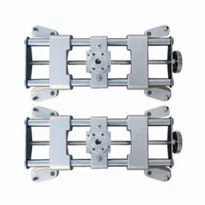
Wireless Alignment Machine
A wireless alignment machine is a device used to measure and adjust the alignment of wheels on vehicles. It uses wireless communication technology to transmit data between the sensors on the wheels and the computer system, allowing for precise and accurate measurements without the need for cables or wires. This makes it more convenient and faster than traditional alignment machines, as well as more versatile since it can be used on different types of vehicles and in various locations.
Advantages of Wireless Alignment Machine
Easy To Use: Wireless alignment machines are easy to use, and they require minimal technical knowledge. They offer a user-friendly interface that any technician can work with, thanks to their mobile and automated features.
Improved Accuracy:Wireless alignment machines use advanced technology to ensure accurate readings, resulting in more accurate alignment. This helps extend the of your tires, reduces fuel consumption and prevents premature wear and tear on other vehicle components.
Wireless: They don't require any cables or cords, making them more flexible and portable. It allows technicians to quickly and easily move the machine around the workshop to any location where car alignment is needed.
Remote Access: Wireless alignment machines can be accessed remotely, enabling both shop owners and service managers to view and monitor all the wheel alignment machines data from their personal devices remotely.
Accurate Readings: They offer more accurate and precise results, thanks to the advanced digital readings that display wheel angles and alignment sheets. The automated nature eliminates the possibility of human error.
Space-saving: The compact design of wireless alignment machines means they take up less space, unlike traditional ones, needing less storage space in your workshop, leaving more room for other equipment.


Why Choose Us
Professional Team
Our professional team collaborate and communicate effectively with one another, and are committed to delivering high-quality results. They are capable of handling complex challenges and projects that require their specialized expertise and experience.
One-stop Solution
With rich experience and one-to-one service,we can help you choose products and answer technical questions.
Rich Experience
Our company has many years of production work experience. The concept of customer-oriented and win-win cooperation makes the company more mature and stronger.
High Quality
Our products are manufactured or executed to very high standards, using the finest materials and manufacturing processes.
Make it personal
When you work with us, you can count on personalized, one-on-one service every step of the way.
Competitive Price
We have professional sourcing team and cost accounting team, stive to reduce cost and profit and provide you a good price.
What Are The Key Components Of a Wireless Alignment Machine
A Wireless Alignment Machine is a system designed to align various components without the use of physical connections like wires or cables. The key components of a Wireless Alignment Machine include:


Sensors: These are devices that detect and respond to some kind of environmental change and convert it into a signal that can be analyzed. In wireless alignment machines, these sensors could measure parameters like temperature, pressure, vibration, or position.
Transmitters: These components receive data from the sensors and send it to a receiver or a control unit. The transmitters could beradiofrequency (RF) modules, Bluetooth modules, Wi-Fi adapters, or any other wireless communication devices.
Receivers: These capture the signals sent by the transmitters. The receiver could be a part of a control unit or a dedicated device that processes the received signals to facilitate alignment procedures.
Control Unit/Processor: This is the brain of the machine which processes the data received from the sensors and transmitters. The control unit might run a software algorithm to interpret the data, make decisions based on predefined criteria, and send instructions back to the transmitters or actuators.
Actuators: These are devices that convert one form of energy into another, often used to physically move or adjust components to achieve the desired alignment. Examples include motors, servos, or other mechanical devices that can be controlled by the wireless signals.
Power Supply: A stable power supply is necessary for all components to function properly. In wireless systems, this could be battery-powered or connected to an external power source, depending on the application.
Software/Firmware: The intelligence that runs on the control unit, which could be a mobile app, a desktop software, or embedded firmware. This software includes algorithms for data interpretation, decision-making, and user interface for operation.
Antennas: For wireless communication, antennas are used to send and receive radiofrequency signals. They are crucial components that help in transmitting and receiving data wirelessly.
Feedback System: This system provides information about the status of the alignment process. It can be a visual display, auditory cues, or even feedback in the form of data that is used to adjust the alignment parameters.
User Interface: This could be a physical interface like buttons, switches, or a touchscreen, or a remote interface such as a mobile app or web interface through which the user can interact with the machine and control the alignment process.

The accuracy of a Wireless Alignment Machine may be slightly lower than that of a wired Alignment Machine, because the wireless signal may be affected by interference or signal attenuation.
The accuracy of a Wireless Alignment Machine also depends on its specific design and performance. Some high-quality Wireless Alignment Machines may have high accuracy and stability, and can meet the needs of most alignment tasks.
Whether it is a Wireless Alignment Machine or a wired Alignment Machine, its accuracy and reliability depend on many factors, including the quality and performance of the machine, the operating environment, and the skill level of the operator. When choosing an Alignment Machine, you can consider your actual needs and application scenarios to choose the appropriate machine.
The primary purpose of a Wireless Alignment Machine is to measure and adjust the alignment of vehicle wheels. Wheel alignment is the process of ensuring that the wheels of a vehicle are properly aligned with the vehicle's suspension and steering systems, which helps improve handling, stability, fuel efficiency, and tire wear.
A Wireless Alignment Machine uses sensors or cameras to measure various alignment parameters, such as camber, caster, toe, and wheelbase. These measurements are then displayed on a computer or handheld device, allowing the technician to make adjustments to the vehicle's suspension and steering components to achieve the correct alignment.
The benefits of using a Wireless Alignment Machine include increased accuracy, efficiency, and convenience compared to traditional alignment methods. Wireless Alignment Machines can also save time by eliminating the need to physically connect sensors or cables to the vehicle, and they can provide real-time feedback and adjustments during the alignment process.


How Does The Wireless Alignment Machine Affect The Performance Of Wireless Networks During The Alignment Process
The Wireless Alignment Machine itself does not directly affect the performance of wireless networks. However, the use of wireless technology in the alignment machine may have some impact on the wireless network in the surrounding area.
During the alignment process, the Wireless Alignment Machine发送 and receives wireless signals to communicate with sensors or other devices. These wireless signals may occupy a portion of the wireless spectrum, potentially causing interference with nearby wireless networks.
If the Wireless Alignment Machine is using the same frequency band as nearby wireless networks, it may result in reduced signal strength, increased latency, or packet loss for those networks. This can potentially affect the performance of wireless devices connected to those networks, such as laptops, smartphones, or wireless sensors.
To Minimize The Potential Impact On Wireless Networks, It Is Advisable To Take The Following Measures:
1. Choose a frequency band that is less crowded or less likely to be used by nearby wireless networks.
2. Configure the Wireless Alignment Machine to use a low transmit power to reduce the range and interference of the wireless signal.
3. Place the Wireless Alignment Machine away from other wireless devices or routers to reduce signal interference.
4. If possible, use wired connections for critical devices that require reliable network connectivity.
What Safety Precautions Should Be Taken When Using a Wireless Alignment Machine
The following are safety precautions for using Wireless Alignment Machine
Personal Protective Equipment (PPE): Before operating the machine, put on the appropriate PPE, such as safety goggles, ear protection, and gloves. Safety goggles protect the eyes from potential debris or sparks, while ear protection shields against loud noises that can damage hearing. Gloves prevent hands from coming into contact with hot or sharp parts of the machine.
Machine Preparation: Ensure that the machine is properly set up and all safety features are in place. This includes checking that all moving parts are secure, and the machine is stable on its stand or mount.
Surroundings: Inspect the workspace for any potential hazards such as water, oil, or other fluids that could cause slippage or electrical hazards. Ensure that the workspace is well-ventilated to prevent the accumulation of fumes or gases that could be produced during the alignment process.
Electrical Safety: Handle the machine with care to avoid exposure to electrical currents. Do not touch electrical components with wet hands or while standing in water. Make sure the machine is properly grounded and that all electrical cords are in good condition, without any exposed wiring.
Operation Procedures: Familiarize yourself with the machine's manual and follow the recommended operation procedures precisely. Avoid improvising or attempting repairs on the machine while it is powered on.
Isolation and Lockout: If the machine needs to be turned off or maintenance is being performed, ensure that it is properly isolated and locked out to prevent accidental startup.
Wireless Signals: Be aware of the potential risks associated with wireless communication. Avoid interference from other wireless devices that could disrupt the alignment process or damage the machine. Keep the machine away from other electronic devices or sources of electromagnetic interference.
Machine Functionality: Regularly check the machine's functionality before use. This includes inspecting the alignment tools, sensors, and any other components that are critical for the machine's operation.
Emergency Stop: Familiarize yourself with the location of the emergency stop button or lever and be prepared to use it immediately if necessary to stop the machine's operation in an emergency situation.
A wireless alignment machine can be used to perform a four-wheel alignment, but its accuracy and ease of use may vary depending on the specific model and features of the machine.
Four-wheel alignment is a complex process that requires accurate measurement and adjustment of the angles and positions of the wheels. Wireless alignment machines usually use sensors or cameras to measure the alignment parameters of the wheels, and then send the data to a computer or handheld device for analysis and adjustment.
Compared to wired alignment machines, wireless alignment machines have the advantage of no cables and wires, which can provide greater flexibility and convenience during the alignment process. However, wireless signals may be subject to interference or signal attenuation, which may affect the accuracy and reliability of the measurement data.
Therefore, when performing a four-wheel alignment using a wireless alignment machine, it is important to follow the manufacturer's instructions and operating procedures carefully to ensure accurate measurement and adjustment. Additionally, it is recommended to choose a high-quality and reliable wireless alignment machine and to have it calibrated and maintained regularly to ensure its accuracy and performance. If you have any doubts or concerns about the accuracy of the wireless alignment machine, it may be a good idea to consult a professional alignment technician.

Can a Wireless Alignment Machine Be Integrated With Other Shop Equipment Or Software Systems For Data Tracking And Management Purposes
Wireless Alignment Machines can be integrated with other shop equipment or software systems for data tracking and management purposes. This integration can help improve the efficiency and accuracy of the alignment process, as well as provide better data management and analysis capabilities.
Some Wireless Alignment Machines may offer built-in integration capabilities, such as the ability to connect to a shop's computer network or to communicate with other equipment and software systems using industry-standard protocols and interfaces. Others may require the use of third-party software or hardware solutions to achieve integration.
To determine if a Wireless Alignment Machine can be integrated with other shop equipment or software systems, it is important to check the machine's specifications and features, as well as to consult with the manufacturer or vendor. They can provide information on the machine's integration capabilities and any available options or accessories for achieving integration.
It may be necessary to work with a systems integrator or IT professional to ensure that the integration is seamless and that all necessary components and software are compatible. This can help to ensure that the Wireless Alignment Machine and other shop equipment and software systems work together smoothly and that data is accurately tracked and managed.
How Does a Wireless Alignment Machine Differ From a Traditional Alignment Rack
A wireless alignment machine and a traditional alignment rack represent two different approaches to the essential task of wheels alignment, which is crucial for maintaining proper tire wear and ensuring a smooth ride.
A traditional alignment rack is a fixed structure where the vehicle is securely lifted, and each wheel is placed on a stand that allows for precise adjustment and measurement of the tire angles. This method often relies on cables, wires, and mechanical linkages to connect the wheel to the alignment equipment, which records the necessary angles such as camber, caster, and toe. The main advantage of a traditional alignment rack is its stability and precision. Since the wheels are fixed in place, it provides an accurate baseline for alignment adjustments. However, it can be less convenient, requiring the vehicle to be driven onto the rack and maneuvered into place, potentially causing additional wear and tear on the vehicle.
In contrast, a wireless alignment machine is a more modern tool that offers greater flexibility and convenience. This system typically involves placing sensors or wireless senders directly on the vehicle's wheels. These sensors can communicate with a central computer or diagnostic tool, allowing for precise alignment measurements to be taken without the need to secure the vehicle to a fixed rack. This method can be particularly useful for shops that do not have a dedicated alignment bay or for mobile service providers who need to perform alignments on-site. The wireless setup can be quicker and reduces the potential for wheel or tire damage since there's no need to mount and dismount them from a rack.
While traditional alignment racks provide a stable and precise platform for accurate wheel alignment, wireless alignment machines offer greater flexibility and convenience, allowing for alignments in various locations and potentially reducing the time and effort required for the process.
Maintenance Tips for Wireless Alignment Machine
Here are some basic maintenance tips for keeping your Wireless Alignment Machine in top condition:
Clean The Machine Regularly
Dust, dirt, and debris can accumulate on the sensors, cameras, and other components of the alignment machine, affecting its accuracy and functionality. Use a soft, lint-free cloth to wipe these parts down regularly, ensuring they remain clean and free from any obstruction.
Calibrate The Machine
Alignment machines need to be calibrated periodically to ensure accurate readings. Follow the manufacturer's guidelines for calibration, and schedule regular calibration sessions to maintain precision in the machine's measurements. This will help prevent any misalignment or inaccuracies in the readings.
Check And Tighten All Connections
Over time, the vibrations and movements of the machine can loosen connections, potentially causing errors or malfunctions. Regularly inspect and tighten all connections, including cables, plugs, and connectors, to ensure they are secure and functioning properly.
Inspect The Cables
Cables are prone to wear and tear, especially in a busy workshop environment. Routinely check the cables for any signs of damage, such as frayed wires or exposed insulation. Replace any damaged cables immediately to avoid electrical hazards or signal interference.
Update Software And Firmware
Manufacturers often release software updates and firmware upgrades to improve the performance and functionality of their wireless alignment machines. Regularly check for updates and install them as recommended to ensure your machine operates at its best.
Keep The Machine In a Clean And Dry Environment
Environmental factors can significantly impact the performance of the alignment machine. Avoid exposing the machine to extreme temperatures, moisture, or excessive dust. Store it in a clean and dry environment to prevent any damage or deterioration of its components.
Our Factory
Nantong LEO Electronic and Technology Co., Ltd was established in 2012. LEO is based on the Shanghai Longbund Electronic and Technology Co., Ltd which was setup in 2003. Since 2003, we have been committed to the development, production and sales of four-wheel alignment. We manufacture the core element of the 3D wheel alignment machines such as the alignment software, high-definition camera, and target. We have established a rigorous and comprehensive 3D wheel alignment machines production and testing process, and obtained ISO9001 quality management system certification. We hold invention patents with independent intellectual property rights for the alignment camera, alignment target and alignment software. We are a national-level high-tech enterprise.


FAQ
Q: What types of alignment adjustments can be made using a wireless alignment machine?
Q: How does a Wireless Alignment Machine work?
Q: What are the benefits of using a Wireless Alignment Machine?
Q: Can a Wireless Alignment Machine be used outdoors?
Q: How can I tell if my vehicle needs a wheel alignment?
Q: Are there any additional benefits of using a wireless alignment machine?
Q: Can a wireless alignment machine be used on a vehicle with damaged wheels or tires?
Q: What is the process for aligning a vehicle using a wireless alignment machine?
Q: What are the limitations of a wireless alignment machine?
Q: What is a wireless alignment machine?
Q: Can a wireless alignment machine be used on any type of vehicle?
Q: What should I look for when choosing a wireless alignment machine?
Q: Can a wireless alignment machine be used for front-wheel drive, rear-wheel drive, or all-wheel drive vehicles?
Q: How accurate is a wireless alignment machine compared to a traditional alignment machine?
Q: Can a wireless alignment machine be used to diagnose other suspension issues in a vehicle?
Q: How long does the battery on a wireless alignment machine typically last?
Q: Can a wireless alignment machine be used in extreme weather conditions?
Q: How do I know if my vehicle needs an alignment?
Q: Are wireless alignment machines compatible with all vehicle makes and models?
Q: What are the maintenance requirements for a wireless alignment machine?
Hot Tags: wireless alignment machine, China wireless alignment machine manufacturers, suppliers, factory, Truck Wheel Alignment, Four Wheel Alignment Equipment, 3D Wheel Alignment Machine, Auto Alignment Machine, Wheel Alignment Clamp, Car Wheel Alignment Machine
Send Inquiry
